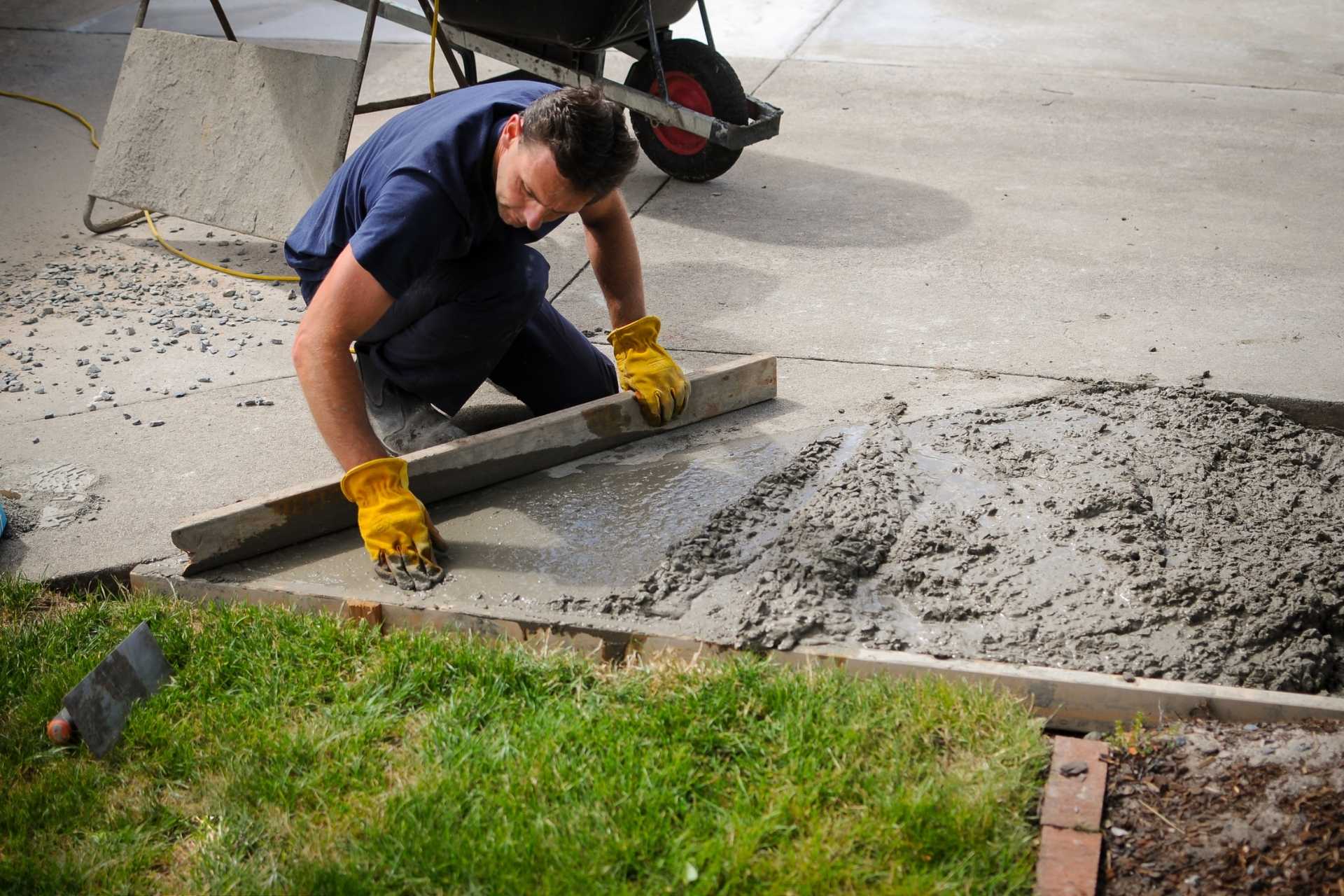
A concrete driveway often looks solid and permanent, which is why early signs of damage are easy to dismiss. Small cracks, surface wear, or minor pooling may seem cosmetic at first, but these issues often signal deeper problems developing beneath the surface. Much like ignoring early warning signs that eventually require roof repair, overlooking driveway damage allows minor issues to grow into costly structural repairs.
Concrete driveway failures rarely happen overnight. They develop gradually as moisture, temperature changes, and usage stress compound over time. Understanding how these issues start—and why they escalate—is the key to preventing expensive repairs or premature replacement.
How Concrete Driveway Damage Develops Over Time
Concrete is a durable material, but it is not immune to environmental stress. From the moment it is poured, it begins responding to moisture levels, temperature fluctuations, and load pressure. As seasons change, these forces create internal stress that slowly weakens the slab.
Damage typically starts below the surface, long before visible signs appear. Minor imperfections expand as water infiltrates and materials shift. By the time cracks or surface deterioration are obvious, the underlying structure may already be compromised.
Cracking That Signals Deeper Structural Problems
Not all cracks are equal, but many homeowners underestimate their significance. Hairline shrinkage cracks may occur naturally, yet wider or spreading cracks often indicate movement beneath the slab. In Canadian climates, freeze–thaw cycles force moisture inside cracks to expand, widening them with each season.
Soil movement, poor base preparation, and inadequate drainage amplify this process. What begins as a narrow crack can quickly become a structural failure point. Addressing cracks early is far less costly than repairing widespread slab damage later.
Poor Drainage and Water Pooling
Standing water is one of the most destructive forces acting on a concrete driveway. When water pools on the surface or near edges, it slowly penetrates the concrete and erodes the base material underneath. This erosion creates voids that weaken the slab’s support.
Improper slope or blocked drainage paths are often the cause. Over time, repeated saturation accelerates cracking, settlement, and surface deterioration. Drainage issues are not surface problems—they are foundational issues that demand attention.
Scaling, Spalling, and Surface Deterioration
Surface damage such as scaling and spalling often appears as flaking or peeling concrete. This deterioration is commonly caused by moisture intrusion combined with de-icing salts used during winter. As the surface layer breaks down, it exposes weaker concrete beneath.
Once the protective surface is compromised, deterioration accelerates rapidly. Water enters more easily, freeze–thaw cycles intensify damage, and repairs become increasingly complex. Surface issues are often the visible warning of deeper structural decline.
Improper Base Preparation and Thickness
Many costly driveway repairs trace back to installation shortcuts. A poorly compacted base or inconsistent slab thickness creates uneven support beneath the concrete. Over time, these weak points settle, causing cracking and surface distortion.
Concrete relies on uniform support to distribute loads evenly. When the base shifts or compresses unevenly, the slab absorbs stress it was not designed to handle. Failures that appear sudden often originate from base issues present from day one.
Heavy Loads and Repeated Stress
Driveways are subjected to more stress than many homeowners realize. Daily vehicle traffic, delivery trucks, garbage collection, and turning wheels place repeated pressure on specific areas. Edges and transition points are particularly vulnerable.
Concrete that was not designed for real-world loading conditions deteriorates faster. Repeated stress compounds existing weaknesses, especially when combined with moisture and temperature fluctuations. Planning for actual use is essential for long-term durability.
Freeze–Thaw Damage in Canadian Climates
Freeze–thaw cycles are one of the most aggressive forces acting on concrete driveways in Canada. When moisture enters the concrete and freezes, it expands, creating internal pressure. Repeated cycles slowly fracture the material from within.
This process is unavoidable in cold climates, but its impact can be minimized. Proper installation, drainage, and sealing slow moisture infiltration. Without these measures, winter accelerates deterioration dramatically.
Why Small Repairs Often Lead to Bigger Costs
Surface-level repairs can be misleading. Patching cracks or resurfacing damaged areas may improve appearance temporarily but often fails to address underlying causes. When moisture and structural issues remain unresolved, repairs deteriorate quickly.
Mismatched materials and patch points can also create new stress zones. These areas often fail first, leading to repeated repairs and escalating costs. Without system-level correction, small fixes become expensive cycles.
When Repairs Stop Making Sense
There comes a point when repairs no longer offer value. Extensive cracking, widespread settlement, or recurring surface failure often indicate that the slab’s integrity is compromised. At this stage, homeowners face the decision to repair or replace your concrete driveway.
Replacement becomes more cost-effective when repairs are frequent and short-lived. Safety, usability, and long-term performance should guide this decision. Recognizing when repairs have reached diminishing returns prevents wasted investment.
How Preventive Maintenance Reduces Costly Repairs
Preventive maintenance plays a critical role in extending driveway lifespan. Regular inspections identify early cracks, drainage issues, and surface wear before they escalate. Timely sealing reduces moisture penetration and protects against freeze–thaw damage.
Maintenance also preserves the results of proper installation. When paired with quality construction, routine care dramatically reduces long-term repair costs. Prevention is always more affordable than restoration.
Why Installation Quality Determines Long-Term Outcomes
Many driveway failures are rooted in installation rather than materials. Factors such as base preparation, slab thickness, reinforcement, and finishing techniques all influence performance. Poor installation decisions cannot be undone with surface repairs.
Understanding concrete curing is particularly important. Concrete gains strength gradually, and improper curing weakens the slab permanently. A professionally-installed driveway accounts for curing time, environmental conditions, and long-term durability from the start.
Most Costly Repairs Start Small
Concrete driveway issues rarely begin as major failures. They start as small, manageable problems that escalate when ignored. Moisture, movement, and climate stress compound over time, turning minor defects into costly repairs.
Early awareness and proactive care protect both the driveway and the investment behind it. With proper installation, maintenance, and timely intervention, most costly repairs can be avoided. Prevention is not just cheaper—it is smarter.