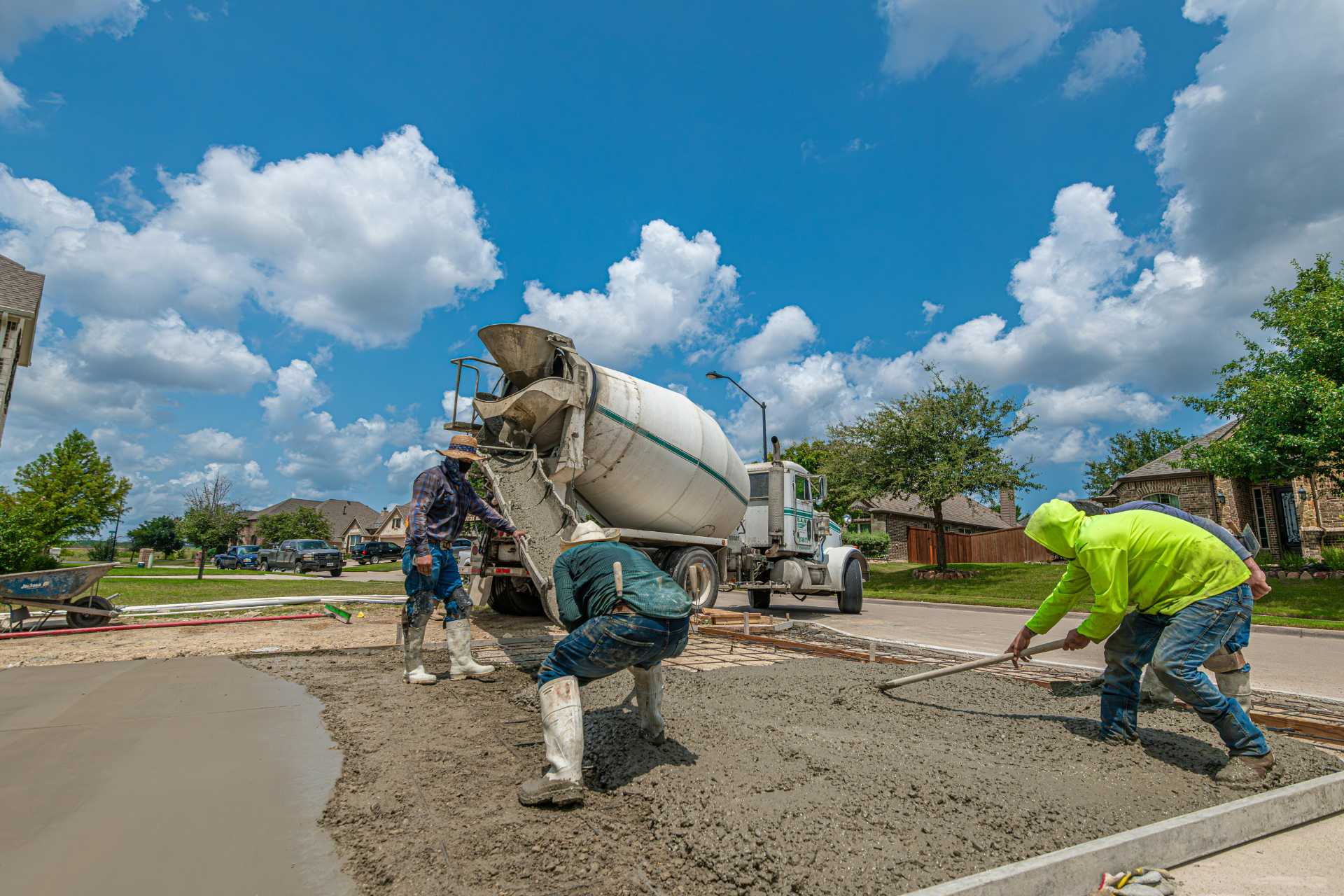
Cracking, sinking, and uneven surfaces are problems many homeowners eventually face with a concrete driveway. While these issues often appear to be surface defects, the root cause usually lies beneath the slab. What happens below the concrete determines how well it performs over time. The strength and durability of any driveway begin in proper base preparation, long before the concrete is poured.
Just as a real estate agent evaluates structural condition when assessing property value, professionals understand that hidden foundational work directly impacts long-term performance. Many homeowners assume thickness alone guarantees strength, but proper preparation plays a far greater role. In reality, proper prep would prevent concrete cracks in many cases where premature damage occurs. Understanding this process is essential to achieving long-lasting concrete driveways.
What Proper Base Preparation Really Means
Base preparation begins with excavation to the appropriate depth, removing unstable soil, organic material, and debris. This step ensures that the surface beneath the driveway is uniform and capable of supporting weight. After excavation, a stable subgrade is established before adding layers of compacted aggregate. Each stage is designed to create a solid foundation before the concrete is poured.
When contractors have properly installed a concrete driveway, it is because significant attention was given to these early steps. Skipping or rushing base preparation increases the risk of shifting and structural weakness. The gravel base must be evenly distributed and mechanically compacted to eliminate air pockets and soft spots. Without this structural groundwork, even high-quality concrete can fail prematurely.
Why Soil Conditions Matter More Than Most Homeowners Realize
The soil beneath a driveway plays a critical role in long-term performance. Clay-heavy soils expand when wet and contract when dry, creating movement that stresses the concrete above. Sandy soils may drain well but can shift if not properly compacted. Identifying and stabilizing these conditions is essential before any base material is installed.
Ignoring soil variability can quickly lead to structural problems. Movement beneath the slab often becomes a common driveway issue that can result in costly repairs, especially when settlement or uneven support develops over time. Proper evaluation allows contractors to adjust preparation methods based on local conditions. Addressing soil stability early helps reduce the likelihood of cracks and sinking later.
The Role of Compaction in Structural Strength
Compaction is one of the most critical steps in creating a stable driveway base. After aggregate material is placed, it must be mechanically compacted to remove air pockets and increase density. This process strengthens the load-bearing capacity of the surface and reduces the likelihood of future settlement. Without adequate compaction, even a thick slab may shift or crack over time.
When performed correctly, proper compaction significantly reduces structural stress. In many cases, proper prep would prevent concrete cracks that develop due to uneven support beneath the slab. A well-compacted base distributes weight evenly and minimizes movement caused by vehicles, temperature changes, and soil shifts. This foundational strength directly contributes to long-term durability.
The Importance of Proper Base Thickness and Material Selection
Base thickness and material selection directly affect structural performance. The aggregate layer must be deep enough to support vehicle loads while resisting settlement over time. Using the correct type of gravel ensures proper interlocking and stability once compacted. If the base is too thin or composed of unsuitable material, stress will transfer unevenly to the concrete above.
A driveway that appears solid on the surface may still fail if these foundational decisions were incorrect. Insufficient base depth often leads to shifting, cracking, and premature wear. By selecting the right materials and installing them to appropriate thickness standards, contractors create the structural conditions necessary for long-term performance. These early decisions determine whether the driveway remains stable for decades or begins deteriorating within a few years.
Drainage and Water Management Under Concrete Driveways
Water is one of the most destructive forces acting on concrete surfaces. If moisture collects beneath the slab, it can weaken the base material and create instability over time. Poor grading or inadequate drainage allows water to pool and saturate the subgrade. This constant exposure increases the risk of erosion and shifting.
In colder climates, trapped moisture can freeze and expand, leading to frost heave. As the ground repeatedly freezes and thaws, pressure builds beneath the driveway and stresses the slab above. Proper slope and drainage design help direct water away from the base, reducing long-term structural strain. Managing moisture effectively is a critical part of ensuring long-lasting concrete driveways.
Why Climate and Local Conditions Influence Base Design
Climate plays a significant role in how a driveway base should be constructed. Regions that experience frequent freeze-thaw cycles require deeper excavation and more stable base materials to prevent movement. Areas with heavy rainfall demand enhanced drainage solutions to avoid water accumulation beneath the slab. Ignoring these environmental factors increases the risk of premature deterioration.
Local soil composition and seasonal temperature shifts must be considered during planning. What works in one region may not perform the same way in another. Adjusting base depth, material selection, and compaction standards according to climate ensures greater resilience. Designing for environmental conditions is a key factor in achieving long-lasting concrete driveways.
What Happens When Base Preparation Is Done Poorly
When base preparation is rushed or incomplete, the consequences often appear within the first few years. Cracks may begin forming in predictable patterns, especially where support is uneven. Sections of the slab can settle or tilt as the soil beneath shifts. These problems rarely correct themselves and often worsen over time.
What starts as a small crack can develop into a common driveway issue that can result in costly repairs if left unaddressed. In severe cases, partial replacement may not solve the underlying instability. The concrete itself is not always the problem; the foundation beneath it is. Without proper groundwork, even high-quality materials cannot compensate for structural weaknesses below the surface.
Signs Your Driveway May Have a Base Issue
Certain warning signs suggest that the problem lies beneath the surface rather than within the concrete itself. Recurring cracks that continue to widen, sections that appear lower than others, or areas where water consistently pools may indicate base instability. These symptoms often develop gradually, making them easy to overlook in the early stages. However, subtle movement beneath the slab typically worsens over time.
Another red flag is the separation between the driveway and the garage floor or adjacent walkways. Uneven transitions and shifting edges signal underlying settlement. When a driveway was not built on a properly compacted and supported base, surface damage becomes more likely. Identifying these signs early can prevent more extensive structural deterioration.
Strength Starts Below the Surface
The durability of any driveway depends on what lies beneath it. While surface finishes and concrete thickness matter, the foundation below ultimately determines long-term performance. Excavation, soil evaluation, compaction, base thickness, and drainage all work together to support structural integrity. When these steps are executed properly, the result is stability that lasts for decades.
Investing time and precision into early preparation reduces the likelihood of cracking, settling, and premature replacement. Many visible surface problems can be traced back to shortcuts taken during installation. Understanding how base preparation influences performance allows homeowners to make informed decisions before construction begins. In the end, achieving long-lasting concrete driveways starts with building strength from the ground up.