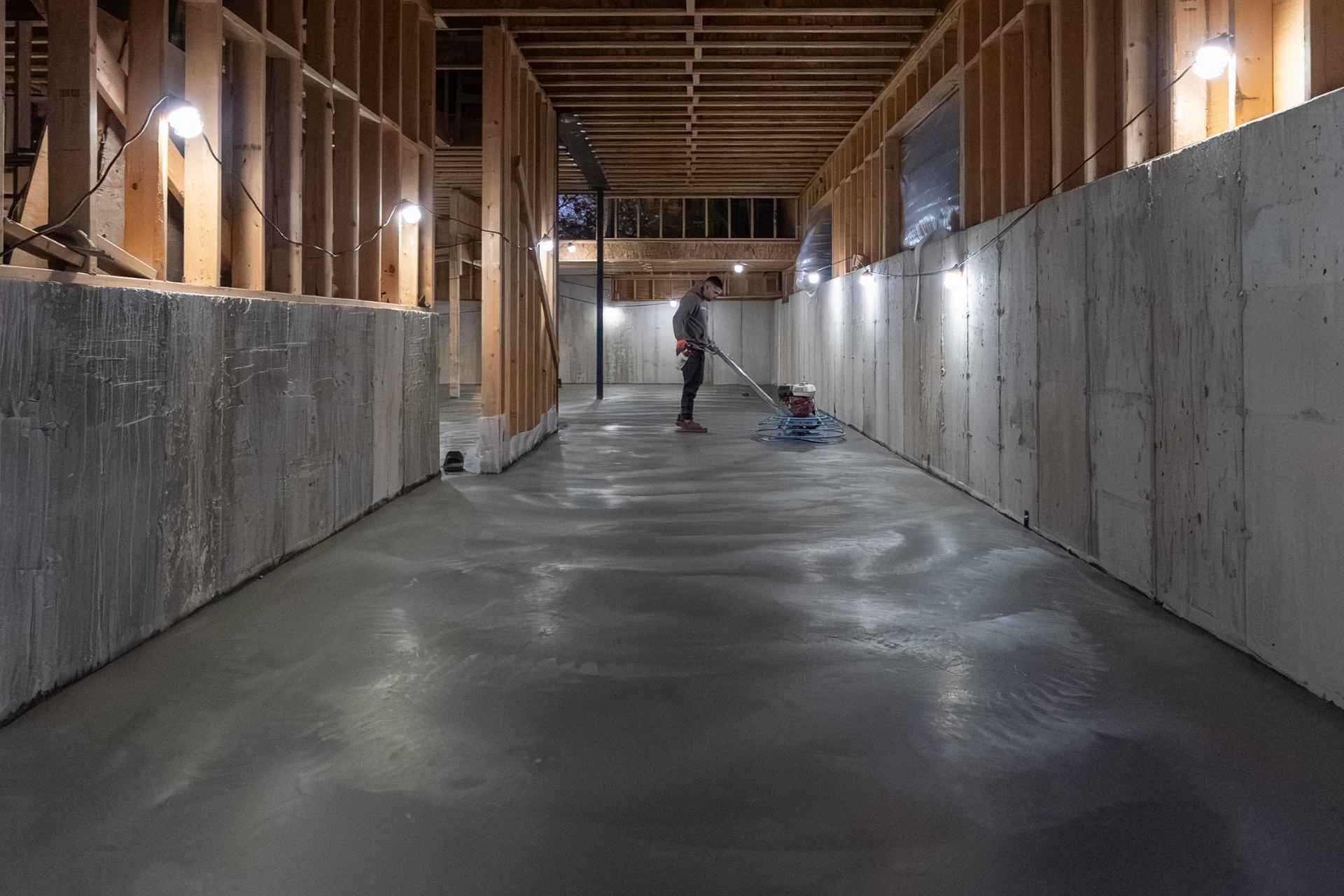
The definition of a “finished basement” has fundamentally changed in the 2026 Ontario housing market. We have moved past the era where a coat of paint and some thick carpet could hide a cramped foundation. Today, savvy buyers and investors look straight at the height of the basement ceilings before they even check the floor plan. They recognize that a house is only as valuable as its usable volume, and nothing kills a high-end appraisal faster than a “crouch-height” cellar. For homeowners looking to maximize their property’s potential, basement underpinning is no longer just a structural option; it is a strategic financial necessity. While many consult a custom home builder for kitchen or bath upgrades, the real power move happens underground, where lowering the floor turns a dark storage area into a primary-quality living environment.
The “Crouch-Height” Penalty: Devaluing the Modern Home
The 2026 market places a heavy premium on vertical volume. Buyers today are savvy; they understand that a six-foot or seven-foot ceiling feels subterranean and claustrophobic, regardless of how much high-end flooring you install. This psychological barrier creates what appraisers call the “Crouch-Height Penalty.” When a basement feels like a bunker, its value is often slashed by 40% compared to a space with full-height ceilings.
By opting for basement underpinning, you eliminate this spatial restriction entirely. Underpinning involves excavating beneath the existing footings in controlled sections to extend the foundation downward. This process allows you to lower the floor, transforming a cramped crawlspace into a grand, open-concept area. In an era where “house hacking” and multi-generational living are the norms, having an eight-foot or nine-foot ceiling is the difference between a “basement” and a “primary residence.”
The Multiplier Effect: Adding Living Space to Your Home
One of the most compelling reasons to invest in a foundation lowering is the sheer volume of additional living space to your home. In land-scarce urban centers, you cannot easily build “out” due to setback bylaws, and building “up” often requires expensive structural reinforcements for the entire house. Basement underpinning allows you to grow your home’s footprint by looking downward.
This newly reclaimed space serves a variety of high-value functions. You can create a professional-grade home cinema, a high-ceiling fitness studio, or a legal secondary suite. In 2026, the demand for “luxury basement apartments” has skyrocketed, as renters are willing to pay a premium for units that don’t feel like traditional basements. When the ceiling is high and the windows are enlarged, the “subterranean” feel vanishes. You aren’t just adding a room; you are adding a self-contained, high-yield environment.
Underpinning vs. Benching: Why Vertical Walls Matter
Homeowners often find themselves choosing between underpinning and “bench-footing.” While benching is sometimes faster, it requires leaving a concrete “bench” or ledge around the perimeter of the room to support the old footings. This ledge eats into your usable floor area and creates awkward furniture placement issues.
Choosing basement underpinning ensures that your walls remain perfectly vertical from the floor to the ceiling. This maximizes every square inch of your investment. From a structural standpoint, this method also allows the contractor to inspect and reinforce the existing foundation walls. It provides a rare opportunity to address long-term issues like cracks or shifting before they become catastrophic failures. In a 2026 climate where extreme weather is common, a reinforced, underpinned foundation offers superior resistance to shifting soil conditions.
The Wealth Factor: The Real ROI of Basement Underpinning
When calculating the cost of a structural renovation, many owners focus on the immediate expense. However, the real ROI of basement underpinning is found in the long-term equity jump. If your neighbourhood averages $900 per square foot, turning 1,000 square feet of “storage space” into “luxury living space” creates nearly a million dollars in new appraised value.
Market data in 2026 shows that underpinned homes sell significantly faster than their neighbours. Potential buyers recognize the “future-proof” nature of a lowered foundation. They see a home that can adapt to a growing family or provide a steady stream of rental income to offset high mortgage rates. Furthermore, because underpinning increases home value so substantially, most homeowners find that the project pays for itself through equity alone within three to five years.
The Invisible Benefits: Waterproofing and Modernization
A professional basement underpinning project is the ultimate “maintenance reset” for an older home. Because the floor is being removed and the footings extended, it is the perfect time to address the home’s “circulatory system.” You can replace aging clay sewer pipes with modern PVC, preventing future backups.
Additionally, this process allows for the installation of external waterproofing membranes and a new internal drainage system. By managing hydrostatic pressure from beneath the new floor, you ensure the basement stays bone-dry. Many owners also take this opportunity to install sub-slab insulation and radiant floor heating. This turns the coldest part of the house into the most comfortable level, providing a consistent thermal barrier that lowers overall energy costs.
Planning for the Future: Professional Structural Surgery
If you are considering remodelling your basement, you must understand that underpinning is a highly technical “surgical” procedure. It requires engineered drawings, municipal permits, and a team that understands the local soil composition. This is never a DIY task. A professional team works in “pins” or stages, ensuring the house remains fully supported while the new foundation is poured beneath it.
The 2026 standard for home renovations is “quality over quantity.” Buyers would rather have a smaller home with a high-functioning, underpinned basement than a larger home with a useless cellar. By lowering the floor, you are essentially “buying land” that you already own. You are reclaiming the earth beneath your feet and turning it into a sanctuary of comfort and wealth.
Raising the Ceiling on Your Equity
Underpinning is not merely a structural fix; it is a financial strategy. In the 2026 market, homeowners who fail to adapt their basements to modern height standards will find themselves left behind. By investing in basement underpinning, you are securing the structural legacy of your property.
You are creating a space that breathes, grows, and generates income. Don’t settle for a low-ceiling cellar when you have the potential for a luxury lower level. Take the leap, lower the floor, and watch your property value soar. True home equity starts from the bottom up, and there is no better way to build a foundation for wealth than by reaching deeper.