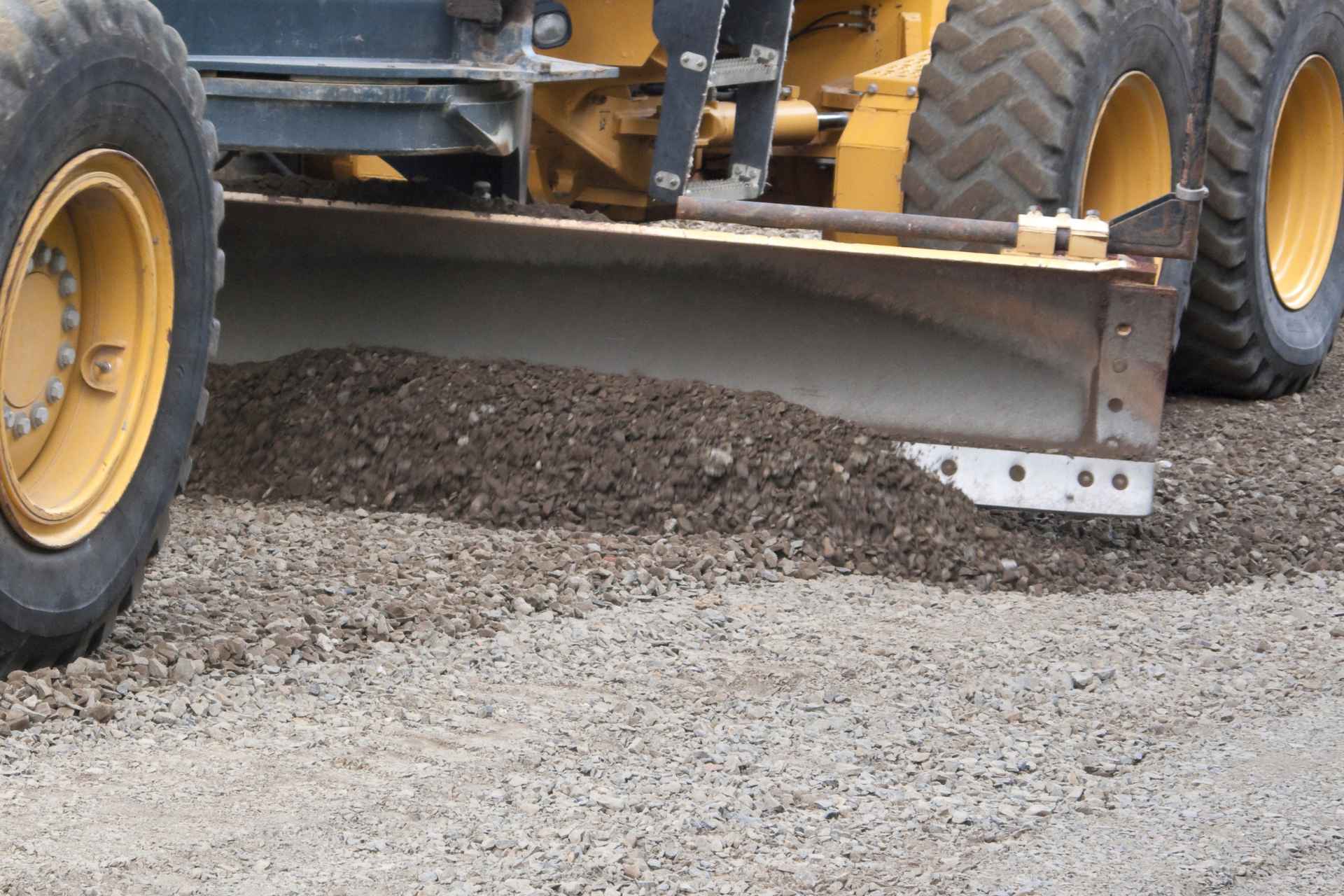
A pristine concrete entrance enhances home curb appeal and increases property value. Installing a durable concrete driveway through precise grading and site preparation requires far more than pouring high-strength liquid cement into wooden edge forms. Long before concrete trucks arrive on site, the ultimate lifespan of your hardscaping is decided deep underground. In Canada, residential driveways face extreme seasonal shifts, heavy snowpacks, and aggressive freeze-thaw cycles. Without a properly graded and compacted sub-base beneath the slab, even the thickest reinforced concrete will crack, shift, and fail within a few seasons.
Building long-lasting outdoor hardscaping relies on precise civil engineering principles. Commercial developers building specialized entertainment venues, like an interactive escape room facility or retail plaza, spend considerable effort perfecting sub-grade drainage and soil compaction. Residential driveways demand the exact same structural precision. Understanding how soil mechanics, slope angles, and gravel aggregate bases interact helps Canadian homeowners protect their hardscaping investments against severe winter weather.
The Quick Edit
- Slope & Drainage Rules: Driveways must maintain a minimum two percent slope away from home structures to prevent water pooling.
- Sub-Base Mechanics: A compacted layer of crushed stone provides crucial structural support and allows groundwater to drain freely.
- Frost Protection: Proper sub-grade preparation stops water from trapping beneath slabs, preventing destructive winter frost heaves.
Why Precision Driveway Grading Is Non-Negotiable
Grading is the foundational process of sculpting the underlying soil and gravel base to achieve exact contours, slopes, and soil densities. In Canadian residential construction, improper grading is the single leading cause of premature driveway failure, far surpassing material defects or improper concrete mix designs.
A properly graded site achieves three vital structural objectives:
- Uninterrupted Surface Runoff: Precision grading directs rainwater and melting snow off the concrete face immediately, preventing standing water puddles that degrade sealant coatings and create winter ice hazards.
- Sub-Surface Drainage Management: Grading shapes the subterranean dirt and gravel base so trapped groundwater flows naturally away from garage aprons and home foundation walls rather than pooling directly under the slab.
- Uniform Structural Support: Precision grading creates a completely smooth, level sub-grade plane. This eliminates high spots and hollow depressions in the soil, ensuring the concrete slab rests on uniform support and eliminating stress concentrations that lead to heavy vehicle cracking.
Skipping or rushing site grading compromises every subsequent construction step. Without precision base grading, even high-strength reinforced concrete will settle unevenly, buckle during winter frost shifts, and develop severe structural cracks.
The Physics of Canadian Sub-Grade Soil and Freeze-Thaw Mechanics
Understanding why sub-base preparation matters requires looking at subterranean water behaviour during northern winters. Native soil across Canada varies widely, ranging from dense clay in the Prairies to sandy loam and glacial till in Ontario and Atlantic provinces. Clay soils retain moisture exceptionally well.
When autumn rains saturate the ground beneath a driveway slab, trapped water has nowhere to go if the subgrade is flat or uncompacted. As winter arrives and soil temperatures drop below freezing, trapped water expands by roughly nine percent in volume.
This expansion exerts immense upward force against the concrete slab, a process known as frost heaving. Because soil moisture levels are rarely uniform across an entire driveway, different sections heave at different rates. This uneven movement creates severe flexural stress across the rigid slab, leading directly to deep structural cracks and surface buckling.
Understanding Sub-Base Preparation and Aggregate Layers
Pouring concrete directly onto native topsoil or uncompacted dirt invites rapid structural failure. Native soil expands, contracts, and shifts under vehicle weight and moisture changes.
Professional contractors establish a multi-layered foundation before placing any concrete. Understanding how proper base preparation prolongs the lifespan of concrete driveways helps homeowners evaluate contractor proposals with confidence.
A high-performance driveway base consists of three distinct structural layers:
- Sub-Grade Excavation: Contractors excavate organic topsoil down to stable, unweathered subsoil, typically six to twelve inches below finished grade.
- Geotextile Fabric Barrier: A heavy-duty woven geotextile fabric is laid over the raw subsoil. This prevents fine clay particles from migrating upward into the gravel base while allowing water to pass through freely.
- Compacted Aggregate Base: A layer of crushed stone aggregate (such as Granular A or 3/4-inch crushed limestone) is spread across the fabric. Workers compact this stone in two-inch lifts using heavy vibratory plate compactors to achieve maximum soil density.
This dense aggregate layer acts as a structural bridge, distributing vehicle wheel loads evenly across the subsoil while providing microscopic void spaces for water to drain away naturally.
The Mathematics of Pitch: Establishing Proper Surface Slope
Proper grading involves two distinct steps: levelling the sub-base and establishing correct surface slopes. Water must move away from the home and off the driveway surface as quickly as possible.
Contractors use optical laser levels to set precise formwork slopes during site prep:
- Minimum Downward Pitch: Driveways must feature a minimum downward slope of one-quarter inch per linear foot (a two percent grade) sloping away from garages and home foundations.
- Crown and Cross-Slope Controls: Wide double-car driveways often incorporate a subtle center crown or a one-percent cross-slope. This directs rainwater toward side lawn swales rather than letting it pool along the center seam.
- Garage Apron Transitions: The joint where the driveway meets the garage floor requires precise elevation control. The driveway slab must sit slightly below the garage threshold to keep wind-driven rain and melting slush from entering the garage interior.
Insufficient slope leads to standing water puddles. In cold weather, these puddles turn into hazardous ice sheets that degrade the decorative concrete finish.
Soil Compaction Testing and Load Distribution Mechanics
Loose aggregate gravel contains excessive air voids. When heavy passenger trucks or delivery vans drive over uncompacted base gravel, the stone shifts beneath the slab.
This movement leaves hollow voids underneath the concrete. Unsupported concrete sections bend downward under vehicle weight, causing corner cracking and structural shear failure.
To prevent this, contractors utilize heavy mechanical plate compactors or rammers to compact the aggregate base to at least ninety-eight percent Standard Proctor Density. High base density ensures that the gravel base can support heavy vehicle wheel loads without settling or shifting over time.
Dense compaction also reduces capillary water movement. By packing aggregate particles tightly together, groundwater cannot easily wick upward toward the underside of the concrete slab during spring thaws.
Control Joint Placement and Thermal Expansion Management
In addition to sub-base grading and slope controls, managing concrete shrinkage and thermal movement is vital for long-term slab performance. Concrete naturally shrinks as it cures and undergoes significant thermal expansion and contraction during Canadian summer heatwaves and winter deep-freezes.
If a concrete slab is poured as one massive, continuous sheet, internal tensile forces will cause random, unsightly spiderweb cracking across the surface. To prevent uncontrolled cracking, contractors saw-cut or hand-tool control joints into the wet concrete slab:
- Depth Ratios: Control joints must be cut to a depth equal to one-quarter of the total slab thickness (e.g., a one-inch-deep cut on a four-inch slab). This creates a weakened plane that forces drying cracks to occur neatly inside the hidden groove.
- Spacing Geometry: Joint spacing should strictly follow a maximum grid distance equal to twenty-four to thirty times the slab thickness. For a standard four-inch residential slab, control joints must be placed every eight to ten feet in square panels.
- Isolation Joints: Heavy foam isolation joints must be placed where the driveway meets rigid structures like garage aprons, concrete steps, or street curbs. This allows the driveway slab to move independently during seasonal frost heaves without transferring damaging pressure to adjacent home structures.
Properly spaced control joints work alongside a compacted gravel sub-base to absorb seasonal thermal shocks, ensuring the slab maintains its structural integrity through severe temperature swings.
Autumn Seals and Surface Defence Protocols
Even a perfectly graded and compacted driveway requires ongoing maintenance to handle severe winter conditions. Executing routine autumn care prevents surface moisture from entering microscopic concrete pores.
Prioritizing seasonal care when preparing the driveway for winter preserves structural integrity through harsh freeze-thaw cycles. Homeowners should complete three essential autumn maintenance tasks:
- Sealing Control Joints: Inspect control joints and expansion strips for missing or damaged sealant. Fill open joints with high-grade polyurethane masonry caulk to keep water from seeping beneath the slab.
- Applying Penetrating Sealers: Coat the concrete surface with a breathable silane-siloxane penetrating sealer. This creates a hydrophobic barrier that repels water, snowmelt, and dissolved de-icing salts without trapping interior vapour.
- Clearing Perimeter Drainage Channels: Remove fallen leaves, soil buildup, and lawn thatch from the outer edges of the driveway to ensure surface water drains freely into street gutters or lawn swales.
Preventing Water Damage and Surface Spalling
Water is concrete’s primary enemy in northern climates. Understanding effective methods for preventing water damage on concrete driveway surfaces helps extend the lifespan of your hardscaping for decades.
Avoid using chemical de-icers containing ammonium nitrate or sodium chloride during the concrete’s first winter season. These chemicals lower the freezing point of water, forcing concrete through rapid, repeated freeze-thaw cycles that break down surface paste and cause surface spalling.
Instead, use clean sand for traction during icy winter conditions. Promptly shovel snow off the driveway surface to minimize the volume of snowmelt soaking into control joints during sunny afternoon thaws.
Foundation First for Lasting Hardscaping
A beautiful concrete driveway depends on the unseen engineering beneath its surface. By excavating to stable subsoil, compacting dense aggregate gravel, establishing precise surface drainage slopes, and cutting strategic control joints, Canadian homeowners can install driveways that withstand heavy vehicle loads and severe winter freezes for decades to come.