For many Canadian homeowners, the driveway is something they only notice when something goes wrong with it. Over time, seasonal wear and tear can turn a pristine entrance into a patchwork of unsightly blemishes. Pitting, scaling, and deep fissures instantly diminish a home’s curb appeal, making the entire property look neglected. When a homeowner pulls into their garage and spots a web of fractures, a wave of financial anxiety usually follows. Siding replacement and roof repairs often dominate the conversation around property maintenance, but a damaged concrete driveway can be just as stressful and expensive to address if left unchecked.
The typical gut reaction to a worn driveway is to assume that the entire structure needs demolition. However, tearing out massive slabs of concrete is a major financial burden that requires heavy machinery, permits, and significant downtime. Fortunately, full destruction is not always necessary. Concrete resurfacing offers a powerful, cost-effective alternative that can erase years of environmental damage in a fraction of the time. The secret lies in understanding whether your driveway is suffering from superficial blemishes or deep structural failures, allowing you to choose the smartest route for your home.
The Quick Edit: Key Takeaways
Before exploring the technical side of concrete restoration, it helps to understand the core metrics that dictate the choice between a simple cosmetic save and a total replacement. Making the wrong call can result in throwing good money after bad, or conversely, spending thousands on a demolition that your property didn’t actually need.
The table below breaks down the essential criteria professional contractors use to evaluate a driveway’s condition:
| Diagnostic Metric | Resurfacing Candidate | Full Replacement Required |
Crack Severity | Hairline fractures under 1/4-inch wide. | Deep, wide fissures running through the entire slab. |
Surface Condition | Minor scaling, spalling, and localized pitting. | Widespread crumbling, exposed aggregate, and structural rot. |
Slab Alignment | Slabs are level; the subbase remains intact. | Sunken sections, major shifting, or severe frost heaving. |
Estimated Cost | Cost-effective; focuses strictly on the surface layer. | Premium pricing; involves full excavation and a new pour. |
Project Duration | Typically completed and cured within a few days. | Requires a week or more for demolition, pouring, and curing. |
In the volatile Canadian climate, timing is everything. Catching surface issues early allows you to use less invasive restoration techniques, sealing out the elements before water can breach the underlying foundation.
Understanding Resurfacing: How a Concrete Overlay Works
To make an informed decision about your driveway, you must first understand that modern resurfacing is not merely a cosmetic masking agent or a glorified coat of paint. In the past, refreshing a driveway often meant applying a thin cement slurry that would inevitably flake off during the next major winter freeze. Today, the industry relies on advanced polymer-modified concrete overlays. These specialized compounds contain synthetic polymers that create a secure molecular bond with the existing, sound concrete base.
This advanced bonding process creates a brand-new wear layer directly over the old slab. Instead of relying solely on the weight of the material to keep it in place, the overlay chemically locks onto the cleaned and prepped surface beneath it. This engineered layer is incredibly dense and durable. It easily withstands regular vehicular traffic, heavy SUVs, and harsh Canadian weather elements.
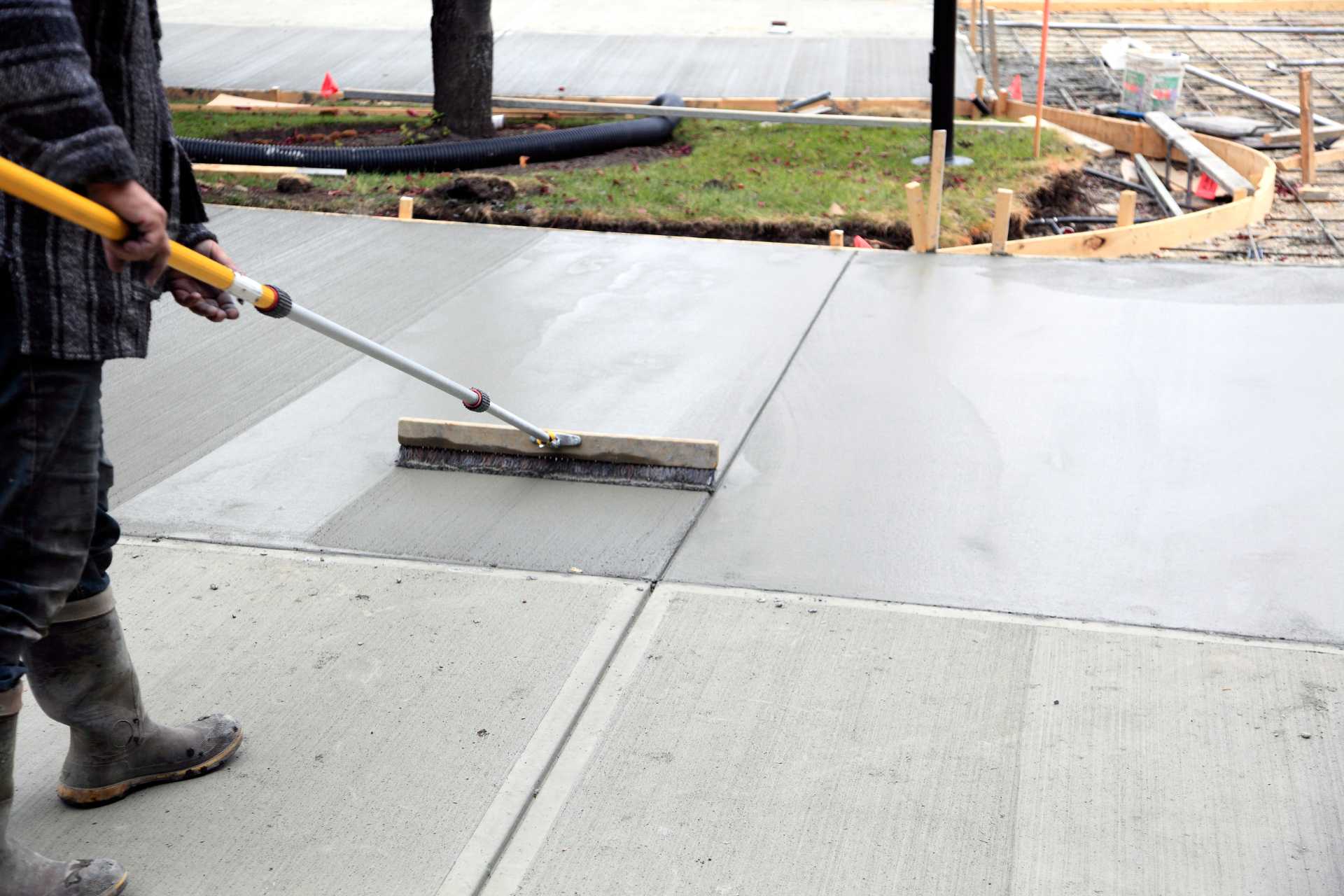
Furthermore, a professional overlay offers incredible aesthetic flexibility. Homeowners are no longer restricted to a standard, chalky white finish. During the resurfacing process, technicians can introduce contemporary dark grey tints, apply custom stamped patterns, or add a classic broom texture to maximize tire traction. However, the success of the installation relies entirely on patience during the initial phase, as proper concrete curing is important to keep the driveway strong and resilient against future traffic loads.
When Resurfacing is the Perfect Fix (Surface Damage)
For many Canadian homes, the underlying foundation of the driveway remains completely solid, even if the top surface looks disastrous. This scenario is where a polymer overlay shines. It saves you from paying for a massive structural overhaul when you only have a surface-level problem.
The most common candidate for a successful resurfacing project is a driveway suffering from spalling and scaling. In Canada, this pitting usually happens because of winter de-icing salts and relentless freeze-thaw cycles. When salt melts snow, the concrete absorbs that water. If that water freezes again inside the pores, it expands and pops off the top layer of concrete. Resurfacing grinds away this damaged, flaky layer and coats it with a fresh, resilient wear surface.
Similarly, minor hairline cracks are perfect candidates for resurfacing. If you notice thin spiderweb fractures that are less than a quarter-inch wide and completely stable, they do not indicate a failing foundation. Instead, they are usually just shrinkage cracks from when the driveway was originally poured. Finally, resurfacing acts as an excellent eraser for stubborn cosmetic blemishes. If your driveway is permanently discoloured by deep oil stains, dark tire marks, or uneven fading from years of harsh UV exposure, a fresh overlay will instantly restore a clean, uniform look.
The Deal-Breakers: When Resurfacing Will NOT Work (Structural Failure)
While a polymer overlay can work wonders on superficial damage, it is not a magic cure for a failing foundation. There are clear scenarios where trying to resurface a slab is a waste of time and money. If you try to overlay a structurally compromised driveway, the new layer will simply mirror the old damage and fail within a single season.
The primary deal-breaker is a sinking or settling slab. If large sections of your driveway are sloping sharply toward your home, or if individual slabs have dropped several inches, the problem lies deep within the sub-base. This issue usually happens when the soil beneath the concrete erodes due to poor drainage or improper compaction during original construction. If you simply pour a fresh overlay on top of a shifting foundation, you will quickly notice that your concrete driveway keeps on cracking as the heavy slabs continue to sink into the hollows below.
Deep, structural fractures are another clear indicator that your driveway is past the point of saving. If you can fit a coin or your finger into a crack, or if the concrete on one side of the crack is higher than the other, the slab has split entirely. This deep movement is often driven by active tree root intrusion or severe frost heaving, where the freezing ground expands with enough force to snap thick concrete. When the earth shifts this drastically every winter, a thin topical overlay cannot hold the structure together. In these cases, the only permanent solution is full demolition and excavation.
The Economics of the Right Choice
When evaluating your options, financial clarity is essential because a concrete driveway is a significant investment for any property owner. Tearing out and replacing an entire driveway carries a hefty price tag, as you are paying for specialized demolition labour, heavy machinery, waste disposal fees, and a massive volume of raw material. Choosing a polymer-modified resurfacing project instead allows you to bypass these massive upfront expenses, typically cutting your total costs by half compared to full demolition.
Beyond the immediate savings, you also have to consider the long-term Return on Investment (ROI). A professionally applied overlay seals the existing concrete, extending the life of your original driveway by 10 to 15 years. This effectively defers a massive replacement bill for over a decade while instantly boosting your home’s exterior appeal. Furthermore, resurfacing acts as a vital form of preventative maintenance. By sealing minor surface pitting and hairline cracks today, you prevent water from seeping into the slab and destroying the subbase during the next winter freeze.
Making the Smart Concrete Investment
Ultimately, managing your driveway comes down to accurate diagnostics. You do not always need a noisy demolition crew and a fleet of dump trucks to achieve a pristine, smooth entrance. If your foundation remains rock-solid, a polymer-modified overlay offers a smart, high-performance shortcut to like-new curb appeal. It bypasses the massive disruption of a full reconstruction while successfully locking out the harsh Canadian elements.
However, skipping the professional assessment phase is never a good idea. An experienced contractor needs to test the integrity of your concrete and evaluate the subbase before any material is mixed. By addressing surface wear early, you protect your home’s structural assets and your wallet. Investing in the right fix at the right time ensures your driveway remains durable, beautiful, and welcoming for years to come.